
What is Paraíba tourmaline?
It is a rare, copper-bearing variety of tourmaline known for an electric blue-green glow that no other gemstone can match. The stone takes its name from Paraíba, the state in north-eastern Brazil where it was first unearthed, and in the decades since its discovery it has become one of the most sought-after coloured gems in the world.
If you have ever seen that lagoon blue in a jewellery cabinet and stopped to ask what it was, this guide is for you. Below, we cover the history of paraiba tourmaline, the science behind its neon colour, how the lab-created version works, and how you can wear this colour in Australia without the collector's price tag.

A Brazilian Discovery: The History of Paraiba Tourmaline
The story starts in the hills of Paraíba state in the late 1980s. A determined miner named Heitor Dimas Barbosa spent years digging through the region's pegmatites, convinced that something special was buried there. In 1989, his team found it: small pockets of tourmaline in a blue-green colour nobody had seen before.
When the stones appeared at the Tucson gem show in 1990, prices multiplied almost overnight. Buyers had never encountered a tourmaline that seemed to glow from within, and the original Brazilian deposits were tiny. Many were largely exhausted within a few years.

A quick timeline:
Late 1980s: Heitor Dimas Barbosa begins exploring the pegmatite hills of Paraíba, Brazil.
1989: The first paraiba tourmaline crystals are recovered.
1990: The stone debuts at the Tucson Gem Show and causes a sensation.
2000s: Copper-bearing tourmaline is found in Nigeria and Mozambique, and the trade extends the paraiba name to these stones.
Today: fine natural paraiba tourmaline is among the rarest gems on earth, with top Brazilian stones trading for more per carat than diamonds.
The African material widened supply, but the Brazilian original remains the benchmark. For every fine paraiba crystal mined, thousands of diamonds come out of the ground, which explains why natural pieces sit firmly in collector territory.
What Gives Paraiba Tourmaline Its Neon Glow?
The answer is copper. Most tourmalines get their colour from iron, manganese or chrome, but paraiba tourmaline contains traces of copper, and that single ingredient changes everything.

Copper produces a saturation that gem dealers describe as neon, electric or windex blue. Even in low light, the stone appears lit from within. Small stones hold their intensity too, which is unusual, so even a modest paraiba reads vividly across a room.
Manganese also plays a part, shifting the colour between blue, green and violet tones. The most prized shade is the pure lagoon blue-green, the colour of shallow tropical water off the Brazilian coast.
Can Paraiba Tourmaline Be Lab Grown?
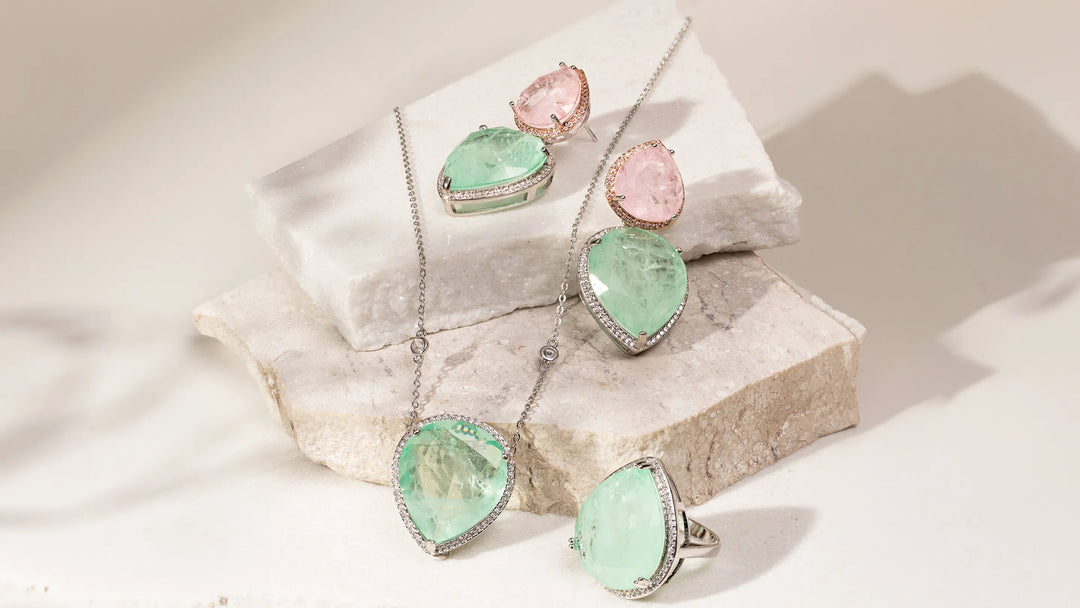
Yes, and this is where the colour becomes wearable for the rest of us. Laboratory methods can recreate the look of paraiba tourmaline, and at Elladora we work with a version we love: the fusion stone.
A fusion stone is made by fusing fragments of natural stone with crystal under high heat. The result carries the colour and clarity of Brazil's famous gem with no mining involved, at a fraction of the price of a natural stone. If the term is new to you, our guide What is a fusion stone? explains the process in detail.
We are always upfront about this. Our paraiba tourmaline pieces are lab-created, not mined, and that is exactly the point. You get the colour that made Paraíba famous, an honest origin story, and a price that belongs in real life rather than an auction house.
Paraiba Tourmaline vs Aquamarine
These two stones are often compared, because both sit in the blue family and both have deep Brazilian roots. Aquamarine has been mined in Minas Gerais for generations, and it remains one of Brazil's best-loved exports.
The differences are easy to spot once you know them:
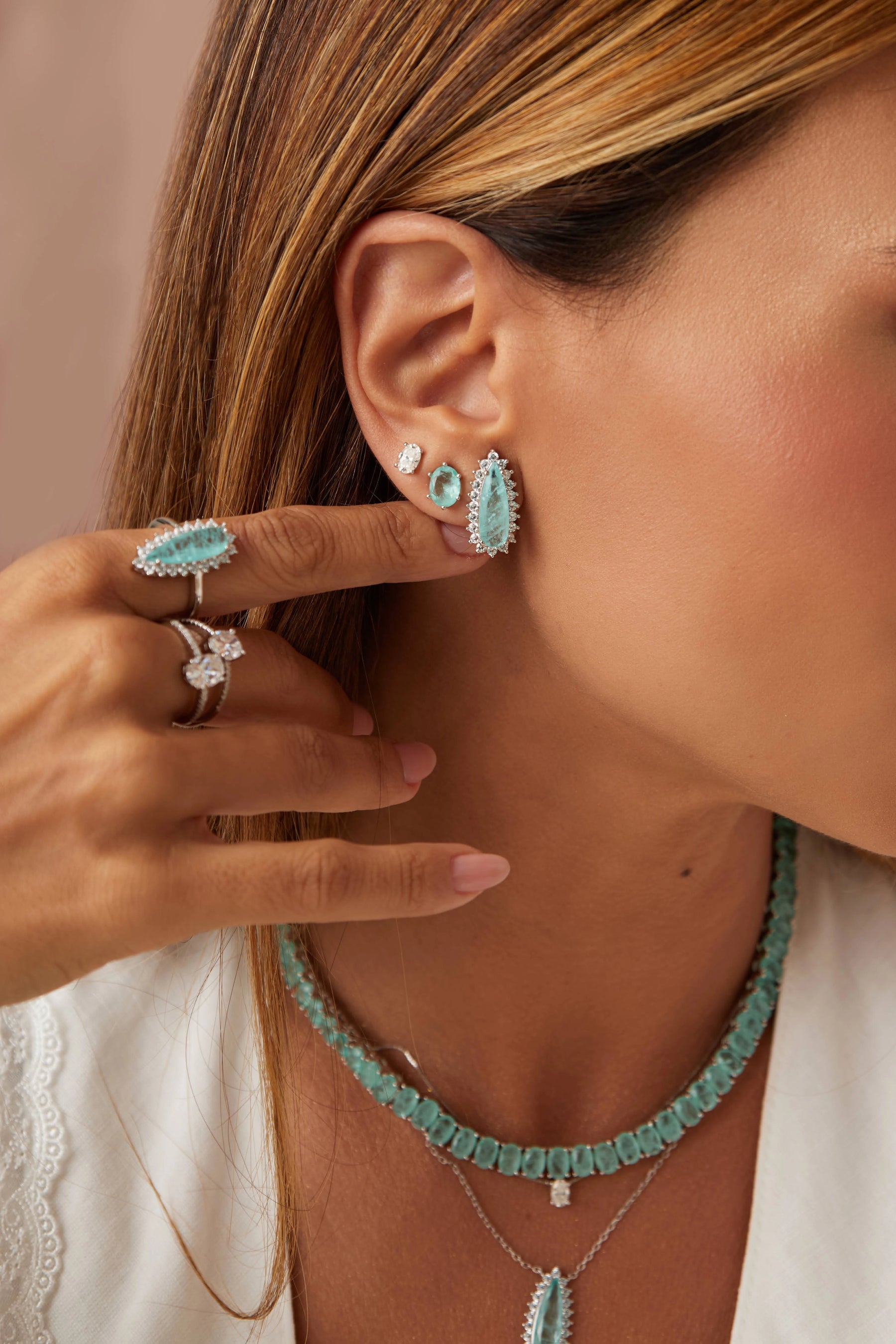
Colour: paraiba tourmaline is an intense blue-green with a neon quality. Aquamarine is a soft, pale sky blue with a gentle, watery character.
Cause: copper creates paraiba's glow, while iron gives aquamarine its cooler tint.
Intensity: paraiba stays vivid even in small sizes. Aquamarine tends to look best in larger stones where its colour deepens.
Price: natural paraiba can cost many times more per carat than natural aquamarine.

Neither is better. They suit different moods. If you love a bold colour that people notice from across the room, paraiba is your stone. If you prefer something soft and serene, aquamarine wins. In fusion form, both are within reach, and our light blue tourmaline pieces offer that softer sky-aqua for anyone leaning the aquamarine way.
Paraiba Tourmaline Jewellery in Australia, for Less
Elladora was founded by Brazilian designer Daniele Xavier, and every piece is crafted in Brazil before making its way to Australia. Paraiba tourmaline is the hero of our fusion stone collection, and it is the colour people stop to ask about at our stall.
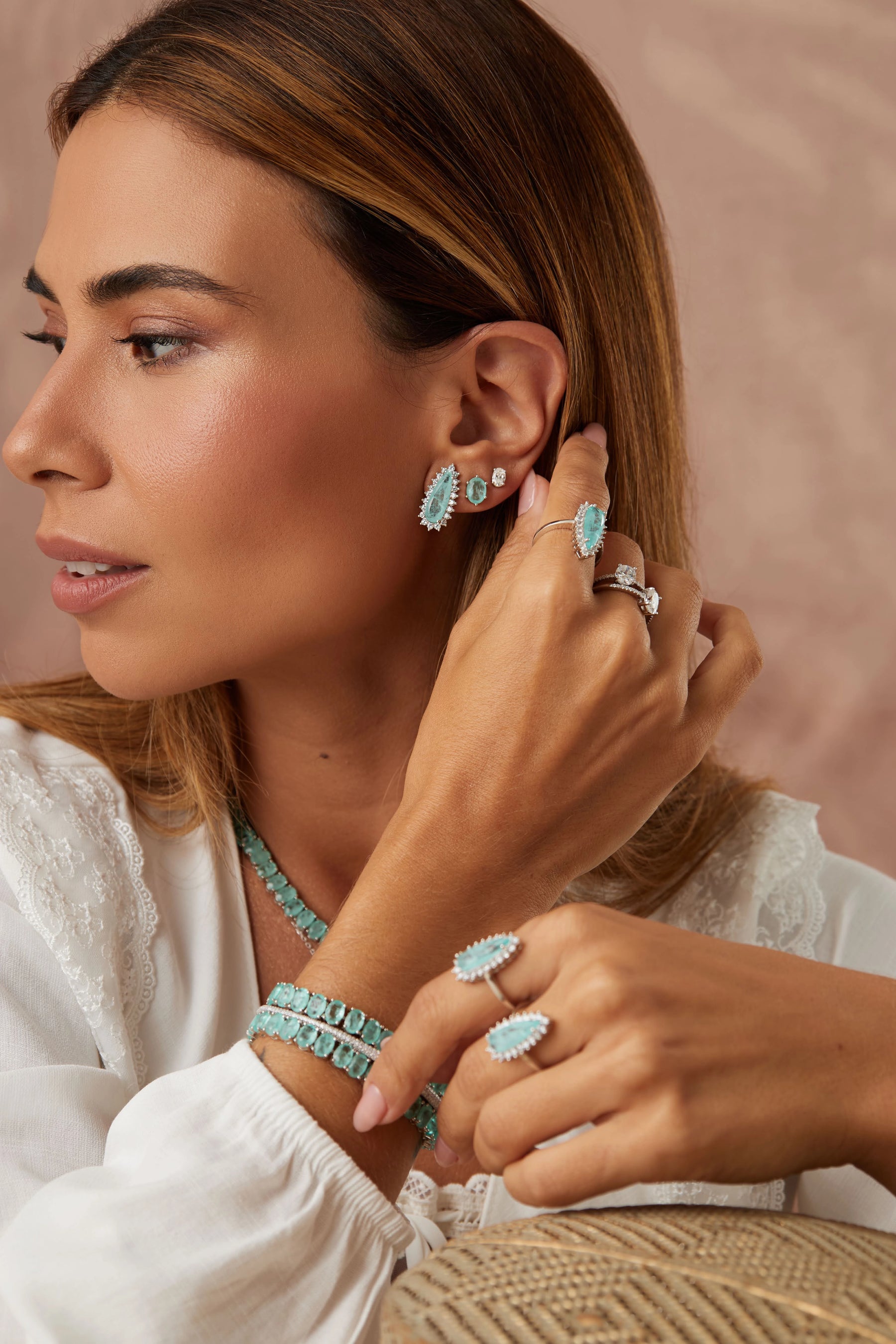
Our lab-created paraiba is set in 925 sterling silver with rhodium plating, so the settings resist tarnish and suit sensitive skin. The range runs deep: paraiba tourmaline rings, necklaces, drop earrings, hoops and a scapular design, with the fusion collection sitting between $49 and $459. Compare that with natural paraiba, where a single carat can cost more than a car, and the appeal is obvious.
You can shop the full range online with delivery across Australia, or visit us in person at the Eumundi Markets on the Sunshine Coast every Wednesday, and Saturday. You can read more about Daniele and the brand on our About page.
The Meaning of Paraiba Tourmaline
Beyond the colour, paraiba tourmaline carries a gentle symbolism drawn from the water it resembles. It is associated with calm, clear communication and renewal, the feeling of a fresh start.
Many of our customers choose it as a personal reminder to speak openly and move forward lightly. Others simply love that it holds a piece of Brazil's story, a colour born in one small corner of the world and now worn far beyond it. Either way, it is jewellery with something to say.
Let's Get You Answers on Paraiba Tourmaline
1. What is the price range for paraiba tourmaline rings available in Australia?
Natural paraiba tourmaline rings in Australia typically start in the thousands and can climb into five figures for fine Brazilian stones. Lab-created paraiba is far more accessible. Elladora's fusion stone collection ranges from $49 to $459, with paraiba tourmaline rings sitting comfortably inside that range.
2. Where can I buy authentic paraiba tourmaline jewellery online in Australia?
Elladora ships lab-created paraiba tourmaline jewellery Australia-wide from our online store. Every listing is transparent about what the stone is: a fusion stone made in Brazil, honestly described and priced accordingly. Browse the fusion stones collection to see the current range.
3. Where can I buy paraiba tourmaline in person?
You will find Elladora at the Eumundi Markets on Queensland's Sunshine Coast every Wednesday and Saturday. (DM us on Instagram if you need help finding us) Seeing paraiba in person is worth the trip, because photographs rarely capture the way the colour shifts in natural light.
4. How do I care for paraiba tourmaline jewellery?
Treat it as you would any fine piece. Wipe it with a soft cloth after wear, keep it away from harsh chemicals and perfumes, and store it separately so harder stones cannot scratch it. Fusion stones set in rhodium-plated sterling silver need no special products, just a little routine care.
Conclusion
Now you know, if anyone asks "what is paraiba tourmaline?" It is Brazil's neon blue gift to the jewellery world, a stone so rare in nature that most people will only ever see it behind glass. Its colour is unrepeatable, but thanks to lab-created fusion stones, it is no longer unreachable.
That is the belief behind everything we make. You do not need a mined gem to wear unforgettable colour. You need the right colour, told honestly, at a price that lets you actually wear it.